




After nearly a decade of synths, bikes, and interdimensional dread, Stranger Things arrives at its fifth and final season carrying the weight of its own legacy. What began as a scrappy, Spielberg-inflected mystery about missing kids and small-town secrets has grown into one of Netflix’s biggest franchises, complete with blockbuster episodes, global fandom, and cultural saturation. Season 5, envisioned as the end of the Hawkins saga, largely succeeds as a polished, emotional farewell—but in the process, it loses some of the underdog charm that once defined the show.
From the start, Stranger Things thrived on contrast. Ordinary kids faced extraordinary threats, and the show’s power came from watching vulnerable characters punch far above their weight. Season 5 still understands that emotional core, but the balance has shifted. The characters are no longer underestimated outsiders; they’re veterans of apocalypse-level events. Hawkins is no longer just a sleepy town with secrets—it’s ground zero for a supernatural war. That escalation makes sense narratively, but it also changes how the show feels.
Visually, Season 5 is the most confident Stranger Things has ever been. The production design leans fully into dark fantasy and horror, with the Upside Down bleeding into reality in striking, often beautiful ways. The scale is massive, closer to a summer tentpole film than the intimate storytelling of Season 1. Directors make full use of shadows, practical effects, and sweeping camera moves, reminding viewers how far Netflix’s flagship series has come. At times, though, the spectacle overwhelms the quieter moments that once made the show special.
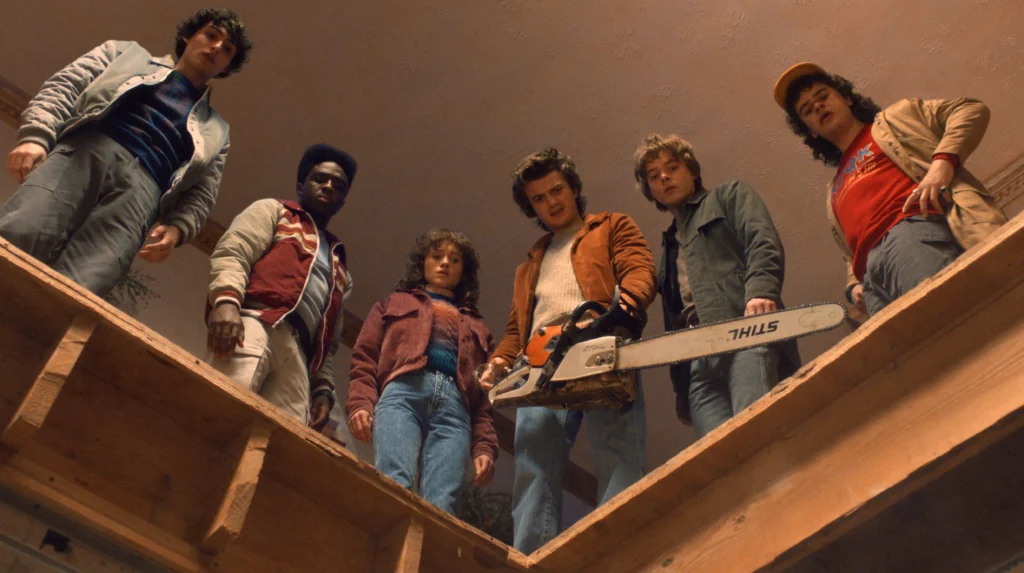
The cast remains the show’s greatest strength. The original kids—now unmistakably adults—bring a sense of history and weariness to their roles. Their performances reflect characters who have grown up too fast, shaped by trauma and responsibility. This maturity adds emotional weight, especially in scenes that acknowledge how much has been lost along the way. Still, that same growth removes some of the spontaneous, messy energy that defined the group early on. The kids no longer feel like underdogs improvising solutions; they feel like seasoned heroes following a destiny.
Eleven’s arc is emblematic of Season 5’s strengths and weaknesses. Her journey continues to explore identity, autonomy, and power, and the writing gives her moments of genuine introspection. Yet her abilities are now so central—and so formidable—that tension sometimes suffers. Early seasons thrived on limitation: powers came at a cost, plans failed, and victories felt earned. In Season 5, the outcomes can feel more predetermined, as if the story is moving chess pieces toward an inevitable end rather than letting chaos rule.
The adult characters fare slightly better in retaining the show’s original texture. Figures like Joyce and Hopper still ground the story in human stakes, reacting with fear, stubbornness, and love rather than mythic certainty. Their scenes often recapture the anxious humor and emotional rawness of earlier seasons. However, even they are pulled into the gravitational force of the larger plot, leaving less room for the offbeat detours and character-driven subplots that once enriched the world.
One of Season 5’s most notable shifts is tone. The season is darker, more somber, and more openly reflective. Nostalgia is no longer playful; it’s bittersweet. The show frequently looks backward, echoing lines, images, and relationships from Season 1. These callbacks are effective and often moving, but they also underline how far the series has drifted from its roots. What once felt like a risky genre experiment now feels like a carefully managed farewell tour.

That said, the emotional payoff is real. Season 5 understands that endings matter, and it invests heavily in closure. Character relationships are given space to resolve, and the show isn’t afraid to linger on consequences. While not every storyline lands with equal force, the overall sense of finality is satisfying. The Duffer Brothers clearly want to honor both the characters and the audience that grew up alongside them.
In the end, Stranger Things Season 5 is a strong, sometimes moving conclusion that trades underdog energy for epic certainty. It may lack the raw unpredictability of its early years, but it compensates with craftsmanship, emotional resonance, and respect for its own history. The series no longer feels like a small show that could fail at any moment—and that’s precisely the point. The underdog has grown up, won the fight, and is ready to say goodbye.